
1988 · Spice
Spice SE88C 1988 for sale
1988 Tiga Gc 288 For Sale
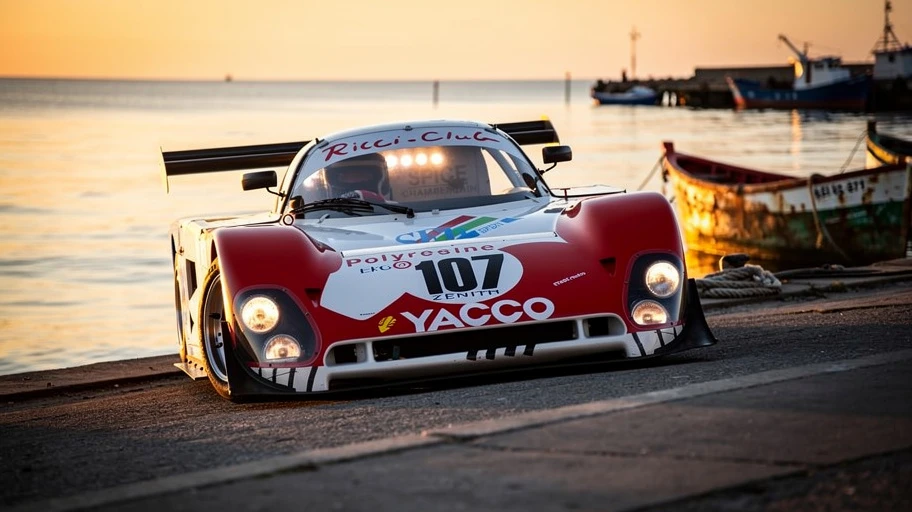
Photo 1 / 25
The story
Two full seasons in the World Championship in 1988 and 1989 A high-performing Spice C2 Cosworth with 14 podiums in historic races - 2nd at the Mans Classic 2025 Richardson 3.3 L engine with low mileage - Lot of interesting parts Suitable for Group C, Dubai GP Revival, Masters Group C and Le Mans Classic Gordon Spice, a successful English driver, starts producing his cars thanks to General Motors Gordon Spice begins his driving career in the mid-60s. He later develops Tiga, before fully starting his manufacturing business with Spice Engineering in 1986. In fact, in 1985, after a full season in C2 (with five wins in seven races in a Tiga GC84/Spice-Tiga GC85), Gordon Spice secures a contract to build chassis for General Motors intended to receive a Pontiac engine for the Camel Lights championship (the equivalent of C2 in IMSA). Thus the Spice Pontiac Fiero is born (named after the road model from which the prototype was to take some characteristics). At his Silverstone facilities, Gordon Spice reflects on the idea of building an adapted version of this car for Group C. This is what he will do by producing a C2 version, which will become the SE86C (chassis 001). This new Group C - which takes on a body similar to the Spice Fiero - allows Gordon Spice to stand out again in 1986 in the World Championship of sports cars. Immediately, the first Spice with a monocoque chassis made of honeycomb aluminum covered with carbon fiber will become the benchmarks in the "small" category of endurance prototypes. And this superiority will be undisputed for several seasons. In 1987, a new demonstration of strength, with the additional support of a first private team, Chamberlain Engineering. In 1988, the bodywork of the Spice C2 evolves very significantly and surpasses the competition. For 1988, the contract with General Motors no longer requires the use of a body derived from the Fiero. The design of the SE will therefore be revised, distancing itself from the road Pontiac. The position of the headlights, the front as a whole, and the design of the rear, particularly the wing supports, are rethought. It is in this configuration that the SE88C chassis 002 we offer for sale fits in. The cars of 1988 are therefore radically different, with new bodywork and new aerodynamic packages and are always present. Thus Gordon Spice consecutively wins his fourth drivers' world championship title (1985, 1986, 1987, and 1988). A record at the time that allows him to equal Juan Manuel Fangio (then the only four-time winner and consecutively proclaimed world champion). SE88C-002 is the first SE88C sold to a private customer. In fact, the two cars officially engaged by Spice Engineering in 1988 were chassis 001 and 003. It is Jean-Louis Ricci who buys the prototype and entrusts his commitment to the Chamberlain Engineering team. He will share the wheel with his friend Claude Ballot-Léna and Jean-Claude Andruet as the third driver during the 1988 edition of the 24 Hours of Le Mans. The 1988 season will still end with three podiums in the championship and the title of vice champion. SE88C-002 indeed shines at Jarama (2nd) and at Jerez and Monza (3rd). The C2 thus shares the track with the Jaguar XJR-9, Sauber-Mercedes C9, and other Porsche 962 C. And the comparison is possible: the Spice SE88C stands out. "These cars easily mix with the C1 as evidenced by the sixth and seventh places achieved at every outing [before Le Mans] by both Spice-Bellm and Copelli-Thyrring" reads the annual of the 24 Hours of Le Mans 1988. Unfortunately, at Le Mans, the trio retires. After an initial alert in the first hour with a short circuit, caused by a fire extinguisher that emptied in the cockpit, Ballot-Léna returns. An extinguisher is replaced, then the driver stops at Indianapolis. A head gasket problem leads to retirement. It should be noted that the decoration displayed then - and now again present on 002 - is the work of Jean Fougerol. He notably designed the livery of the Porsche Cachia engaged in 1977 or the Ferrari 512 BB of Charles Pozzi in 1979. In 1989, Jean-Louis Ricci registers the car in the name of his own team, France Prototeam, and participates again in the 24 Hours of Le Mans. This time 002 will not only find itself on the podiums but also with a victory in the Supercup race held at the Nürburgring. 2nd in Dijon and Jarama, 3rd at the Nürburgring, 5th at Brands Hatch and Mexico, the Spice allows France Prototeam to secure fourth place in the C2 team standings, behind a 100% English podium... and Spice! Proof that the "SE" are the reference. At the 24 Hours of Le Mans, the adventure is more complete than in the 1988 edition, with a retirement that occurs only halfway through the race. No mechanical problems.
Technical specifications
| Anno | 1988 |
Vehicle history
Listing created
8/5/2026
Price
Price on request
Prezzo fisso
By contacting the seller you accept AutoEpoque's Terms and Conditions.
Ascott Collection
Verified seller
- Based in
- Gazeran, FR
- Member since
- 2026
Buyer protection
Your payment stays protected until delivery and vehicle verification.