
1972 · Porsche
Porsche 911 2.8 RSR Prototyp 1972 for sale
Porsche 911 2.8 RSR Prototyp 1972
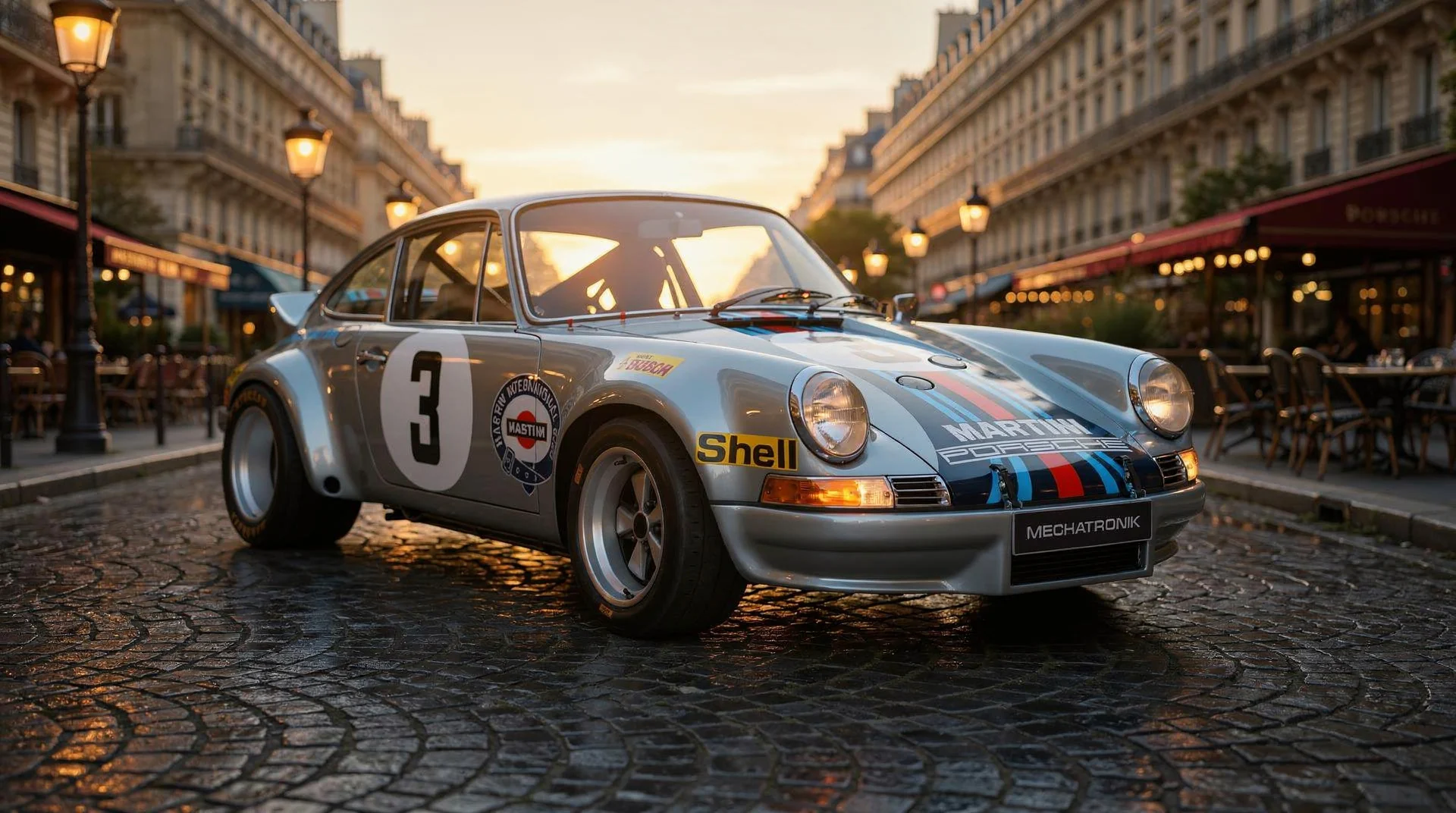
Photo 1 / 13
The story
Porsche 911 2.8 RSR Prototype from 1972. It is considered one of the most important racing cars of the early seventies and a benchmark in the development of the 911 as one of the most successful motorsport platforms of all time. Introduced in 1973, the RSR was born on the basis of the Carrera RS 2.7, which in turn was created out of the need to produce a vehicle homologated for motorsport. With this, Porsche responded to the FIA Group 4 regulations in force at the time. After the great success of the 2.7 RS, Porsche developed a further refined version for professional track use, giving birth to the Carrera 2.8 RSR. Its goal was maximum performance with the minimum possible weight and maximum reliability. The RSR received numerous technical and aerodynamic modifications compared to the RS. Under the hood worked an air-cooled six-cylinder boxer engine with a displacement of 2,808 cc, equipped with a Bosch mechanical fuel injection system and new twin ignitions. This technology allowed for a power output of around 308 hp at 8,000 rpm. These were impressive figures for a car that weighed just over a ton. A dry sump lubrication system ensured optimal lubrication under extreme racing conditions. The revised engine block and lighter pistons contributed to high dimensional stability. The chassis was significantly revised compared to the production model. Porsche used stiffer torsion bars, Bilstein shock absorbers, and adjustable stabilizers. Wider axles and the installation of spacers allowed for a significantly wider track, greatly improving road holding. The RSR was fitted with wide magnesium wheels in the Fuchs design with central locks, equipped with special slick tires. The braking system came from the 917, Porsche's legendary Le Mans prototype, and ensured exceptional deceleration values. Externally, the 2.8 RSR was immediately recognizable by its heavily flared wheel arches and the iconic ducktail rear spoiler, which had already been introduced with the RS 2.7, but in the RSR version was even larger for increased downforce. Front spoiler, lightweight glass, and aluminum components completed the coherent lightweight construction concept. The vehicle's weight was around 960 kilograms. This was a decisive factor for its enormous agility. Inside, everything was oriented towards functionality and weight saving. The RSR had no sound-absorbing materials, carpets, or comfort features. A roll bar, bucket seats, racing belts, and a covered dashboard characterized the image. The instrumentation remained typically clear and focused on the driver. The 2.8 RSR debuted in 1973 at the 24 Hours of Daytona, where it immediately secured the overall victory. A spectacular success for a vehicle that was still in development. Also at the Targa Florio, 12 Hours of Sebring, and in numerous European endurance races, the RSR proved to be almost unbeatable. In the hands of customers, it achieved countless class wins and overall successes worldwide, laying the foundation for a series of 911 racing models. In 1973, about 50 units of the 2.8 RSR were built, making it one of the rarest and most sought-after variants of the classic 911. Its combination of purist technology, uncompromising lightweight construction, and racing reliability made it one of the most legendary Porsche racing cars of all time. To this day, the Carrera 2.8 RSR represents the symbol of the connection between road vehicle and racing machine. It is a car that embodies the DNA of Porsche motorsport like few others. This is one of the two prototypes of the 2.8 RSR and carries chassis number 9113600002. Its history began according to the Porsche certificate as a normal 911 S in March 1972 with the intended use of "vehicle owned by Porsche AG, test vehicle." In the same year, the transformation into RSR prototype took place, during which it was used for testing and homologation. The vehicle, painted red at the time, made an appearance, among other events, at the 1,000 km of Zeltweg on June 25, 1972. In this race, driver Waldegrad and Steckkönig achieved 10th place. Shortly after, the vehicle was sold to the Martini Racing Team, which was under the guidance of the famous "Count Rossi." Here the vehicle received its first registration on January 1, 1973, with the German license plate "LEO-ZA 60" and was painted silver. Additionally, the RSR received the legendary Martini stripes. After an endurance test at Paul Ricard, the vehicle was presented to the public in Paris on March 5, 1973. In historical images, the vehicle is positioned on a stage behind Gregorio Rossi di Montelera next to the 917-053. For the press conference, the car carried race number 3, which is currently on this RSR. The Martini Racing Team fielded the 0002 on May 13, 1973, at the Targa Florio with several RSRs. After the total damage of chassis 0974 with race number 107, this was used for the race on chassis 0002, with which Pucci and Steckkönig ultimately achieved sixth place in the overall standings. The twin vehicle, chassis 0588 with number 8, won the race. There are many historical images of this race. Subsequently, Martini sold the vehicle to tire manufacturer Dunlop, which again used the prototype for development, this time for tires. After a year in the hands of Dunlop, they sold the vehicle without an engine through Peter Gregg to American Dave White, who subsequently had a new engine installed. The new engine, which is currently installed in the vehicle, is one of only four factory engines ever built with a short stroke. The engine had previously been used in 1973 in chassis 0307 at the 24 Hours of Daytona, as well as in the 6 Hours of Vallelunga via chassis 0588. In 1975, the driver sold the RSR to Edgar Ramirez, a resident of Costa Rica. He used the vehicle for the next 10 years for races in Central and South America, until he sold it in 1985 to driver Diego Febles. The new owner ran a "race car rental" business, for which he used the prototype.
Technical specifications
| Anno | 1972 |
Vehicle history
Listing created
8/13/2026
Price
Price on request
Prezzo fisso
By contacting the seller you accept AutoEpoque's Terms and Conditions.
Mechatronik GmbH
Verified seller
- Based in
- Pleidelsheim, Baden-Württemberg
- Member since
- 2026
Buyer protection
Your payment stays protected until delivery and vehicle verification.